
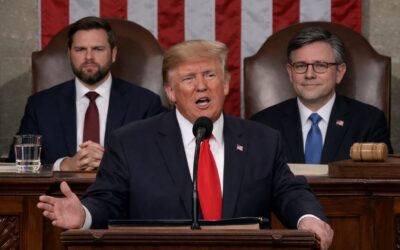
The globally de-stabilizing, illegal attack on Iran by Trump’s USA and Netanyahu’s Israel may have one positive benefit. It may take other countries openly coveted by Trump – Venezuela, Greenland, Cuba, and Canada – off his immediate radar screen.
The US currently is spreading its military resources thin, shifting them to the Gulf from places like South Korea and Japan. Logically, it should be less able to threaten other countries in the foreseeable future.
The US is also increasing the pain felt by its citizens, with higher prices, poorer social services, and soldiers returning from foreign lands in caskets. All of this is different from what Trump promised his MAGA followers.
Of course, Trump could try to deflect the dismay of the US electorate by more acts of adventurism, conceivably painting Canada as a hostile state hovering above the northern border. He could portray Canada as harming US interests by failing to provide necessary resources (e.g., oil, gas, minerals, hydro power) at the right price and by schmoozing with rivals of the US (notably China).
Yet, despite strong control by Trump’s media allies over Americans’ sources of information, it appears that his popularity is wanning, at least slightly. There may be growing skepticism over the various excuses he spouts regarding the launching of a war that has now engulfed the entire Middle East. This means we can hope that rampant misinformation about Canada – especially that designed to rally Americans to support our demise as a nation – will fall on deaf ears in the future.
Meanwhile, Canada must do everything possible to shore up its own sources of reliable, unifying information. Which means properly funding the Canadian Broadcast Corporation, so it can staff local bureaus across the provinces and territories, in addition to placing reporters in key overseas locations. With the near-disappearance of local newspapers, Canadians need trustworthy places to learn about the candidates in municipal elections, school schedules, local road repair, and such everyday matters, PLUS national and international news. The best CBC stories can go out to wire services and digital outlets for global distribution, allowing CBC to at least influence the narrative about Canada.
None of this is intended to suggest that Canada can relax its vigilance. The removal of all reins over mega billionaires in the US – whose money swings election outcomes there – means that Canada’s guardrails for democracy also will be under attack, both openly and covertly. The billionaires operate across borders around the world, as we see with the titans of social media and AI, such as Mark Zuckerberg of Meta and Sam Altman of ChatGPT.
One can only imagine the multiple pressures on Prime Minister Mark Carney. He must fend off threats to Canada’s sovereignty while simultaneously dealing with the fractiousness inherent to a parliamentary democracy. He must lead Canada to painfully pivot away from the US economic juggernaut and toward untried market partners further away. He must make Canada more self-sufficient, both militarily and economically. He must rally Canadians to accept the belt-tightening that will be necessary to accomplish the foregoing.
In the meantime, there necessarily will be some shelving – hopefully, temporary – of treasured ideals of political transparency, climate-change resilience, and social justice for Canada’s long-suffering indigenous populations. I say this with sadness, but also with realism. If Canada can survive intact in the coming decade, my hope would be that our civil society also remains intact and functional, able to be galvanized to fight for returning Canada to its highest ideals when the need for outward-facing unity is lessened.
I am not suggesting that Carney should not be held to account when he missteps in his leadership role, as he did by swiftly endorsing the attack on Iran. His words of support were so at odds with the more measured responses of other Western leaders – and at odds with his own Davos statements – that I wondered whether he had been explicitly told, “If you pussyfoot around this invasion, you’re in our crosshairs next.” If so, he may have calculated that the cost to himself politically was low enough to make empty words of support worthwhile. It would have been a wrong calculus, but an understandable one.
One of the lessons of history is that tyrants and invaders achieve power when there isn’t a “united front” against them. On the single issue of abortion rights, Charlie Angus offered an excellent example of this principle when he analyzed how infighting among progressive women’s groups in the US opened up space for the rollback of women’s right to control their bodies. In Germany in the 1930s, squabbling among anti-fascist groups permitted Hitler to seize power despite having the backing of less than 40% of the electorate (he was also supported by Germany’s conservative elites and industrialists).
When Canada’s very existence is at stake – as it is in the era of Trumpian oligarchy – all of us need to make it a priority to stand unified against external threats (and internal threats fueled by external actors). Period.
Trump’s gleeful, murderous assault on Iran likely will deflect him and his billionaire coterie from engaging in adventurism in regard to Canada in the near future. But Canada won’t be safe until the rule of law is re-established south of the border, with a modicum of regulation over the 1% who control roughly one-third of all wealth there.
Canada’s economy is also highly inequitable. Yet it’s not as bad as the US’s – the top 1% here control about one-quarter of Canada’s wealth. In other words, the top 1% in the US control roughly 50% more of the national wealth than their counterparts in Canada.
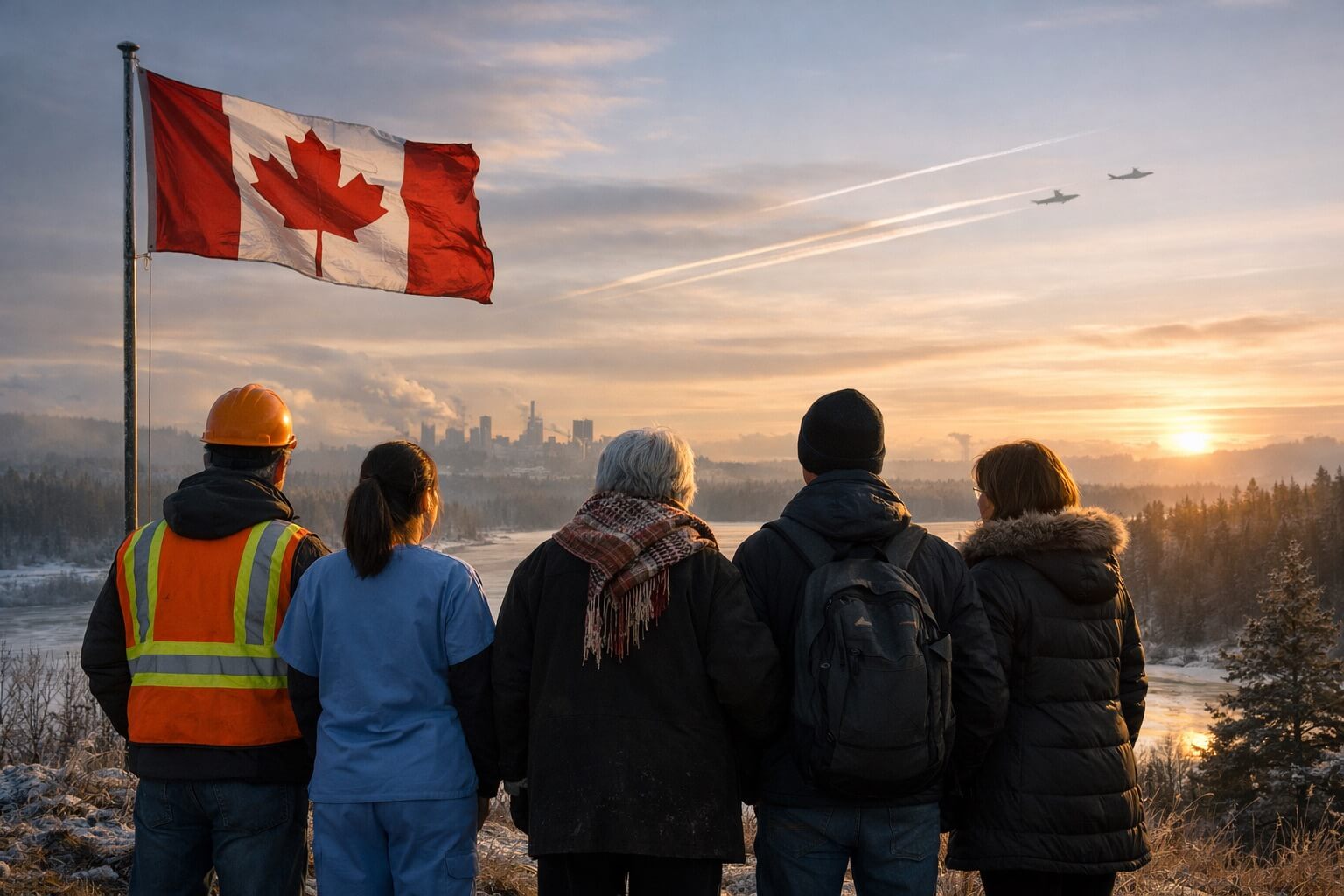
All of the above means: Who knows when the US will no longer be a direct threat to Canada? While dreaming of a turn for the better in the US, we have no choice: “Elbows up.” Canadians must play this game as if we are part of one unified team.


0 Comments