


I wish I could share the Globe and Mail’s powerful August 13th editorial cartoon. Unfortunately, it’s copyrighted and subscriber-only. The image, captioned “Gradually – then all at once …”, shows a stunned Uncle Sam tumbling from a cliff, the ground crumbling beneath him. Along the path he ignored clear warnings: “Authoritarian Path,” “State of Emergency,” “Rule by Edict,” and “Deploy the Troops.”
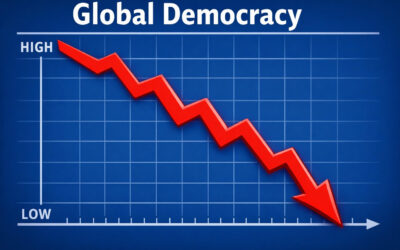
That cautionary image prompted me to ask Google AI for a list of defining traits of a state sliding into fascism. The response, drawn from New Hampshire’s Keene State College, outlined 16 warning signs of democratic decline. Disturbingly, the Trump Administration has advanced so far along nearly all of them that few impartial observers could argue it is anything but fascist in nature.
Signs of Fascism in Government
The history of fascist regimes is alarmingly consistent: once they rise, they devastate once-healthy democracies and economies, leaving millions of lives lost or shattered. Against this backdrop, it is difficult to see how any thinking person could support such a movement—unless silenced by the climate of fear fascist thugs cultivate. For Canadians, this unfolding tragedy underscores why protecting Canadian democracy is vital.
Key characteristics of fascist systems include:
- Rise of authoritarianism in America: exclusionary populist nationalism centered on the cult of an “infallible” leader.
- Political power built on myth, rage, and lies.
- Obsession with perceived national decline and victimhood.
- Use of “White Replacement Theory” to portray equality as a threat.
- Disdain for human rights and a push for purity.
- Scapegoating minorities and opposition, often leading to imprisonment or murder.
- Supremacy of the military and glorification of violence as redemptive.
- Rampant sexism.
- Control of mass media and deliberate undermining of truth.
- Obsession with national security, crime, and punishment.
- Merging of religion and government.
- Protection of corporate power while suppressing labor.
- Disdain for intellectuals and arts outside the narrative.
- Rampant cronyism and corruption; loyalty outweighs competence.
- Fraudulent elections and the creation of a one-party state.
- Aggressive expansionism through armed conflict.
Historical Lessons from Fascism
Looking at these patterns, the dangers of fascism in modern politics become impossible to ignore. Authoritarian populism is not just a problem for the United States—it threatens stability worldwide. History reminds us that the erosion of human rights under authoritarian rule rarely stops at borders.
For Canadians, the lesson is clear: distance must be maintained from such movements, and democratic institutions must be defended. To ignore the past is to risk repeating it.





0 Comments