
Why the World Needs Middle Powers to Act Together
This is to bring to your attention an eye-opening opinion piece by Fen Ostler Hampson (a senior Canadian academic) and Tim Sargent (a former federal Deputy Minister of Trade) in the business section of the February 16 Globe and Mail (use this link if you are a Globe and Mail subscriber). Their analysis serves to flesh out Prime Minister Mark Carney’s highly influential January 2026 Davos speech in terms of what middle powers could actually do to protect themselves economically and politically from being dominated by the USA, Russia and China.
Connecting Carney’s Davos Vision with Middle Power Trade Strategy
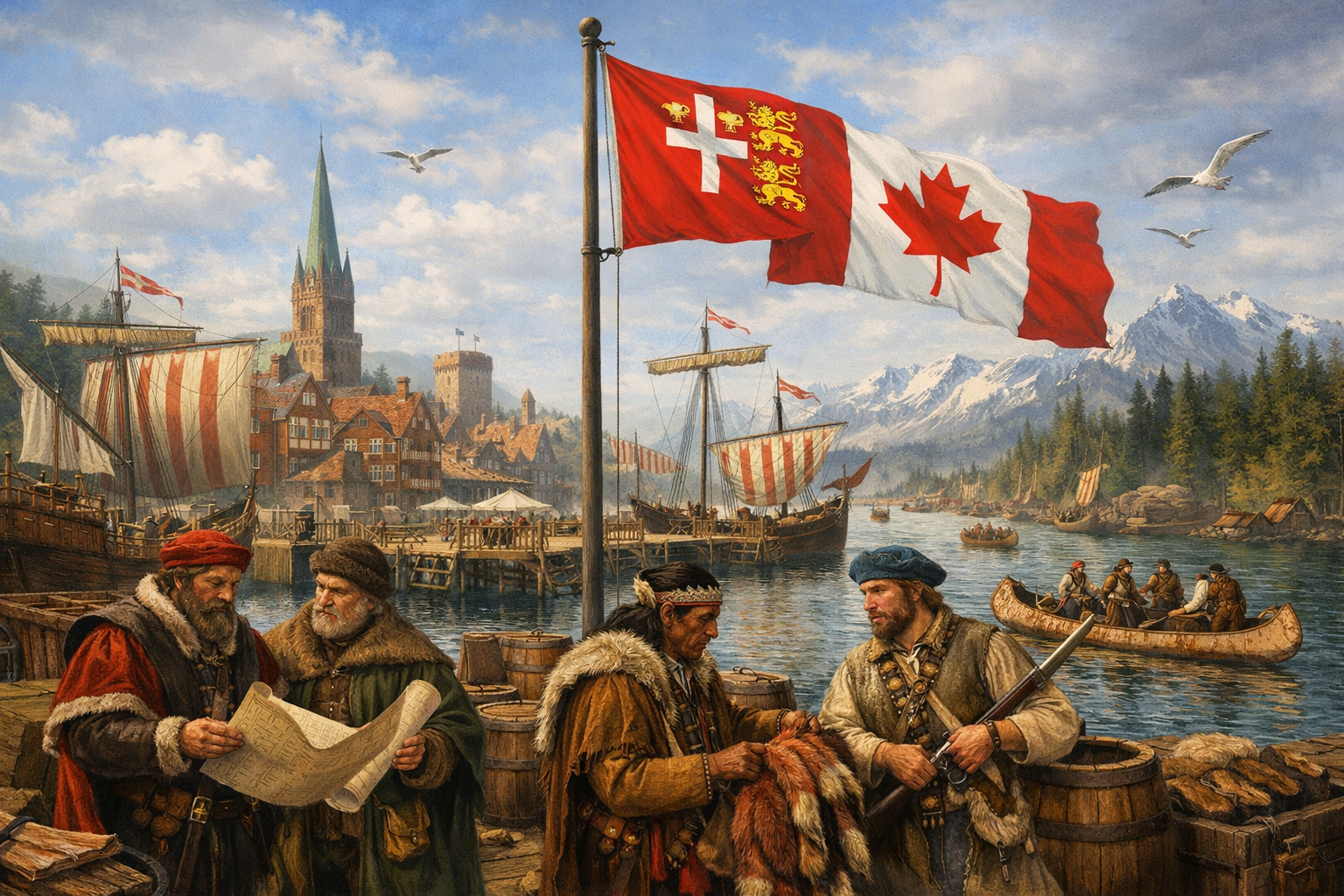
In his speech, the Prime Minister called for new trade agreements between the European Union (EU), Britain and the Comprehensive and Progressive Agreement for Trans-Pacific Partnership (CPTPP), Canada already being a member of the latter. The authors suggest that those 40 advanced countries work together in a modern equivalent of the historic Hanseatic League of merchant guilds and market towns which dominated Northern Europe and the Baltic region between the 13th and 15th centuries.
Such a league of middle-power democracies would account for almost 31% of global GDP, well in excess of the United States’ 26%. The proposal argues that this economic and political alliance should adopt NATO’s core principal to the effect that an attack on any one of the members would be treated as an attack on them all. While US spends slightly more on its military than all those 40 countries combined, the authors point out that the latter collectively wield greater market-power leverage over global finance and trade.
How Financial Leverage Could Become Strategic Deterrence
The article includes a striking graph showing that the net US debt to the rest of the world has mushroomed over the past decade from US $8 trillion to a staggering US $27 trillion. Member countries’ dumping US Treasury Bills and other securities in retaliation for a military, economic or trade attack on a fellow member state could devastate the US economy. This kind of economic retaliation could provide each member with a deterrent far beyond what their individual militaries could ever offer.
In a more recent February 19, Globe and Mail article, long-time columnist Lawrence Martin makes the important point that military spending in and of itself is not a reliable measure of military effectiveness. Mr. Martin cites the surprising ineffectuality of that massive spending in the three major US military operations of the past 60 years (Vietnam, Iraq and Afghanistan), comparing those outcomes to Canada’s peacekeeping missions over that same period, as well as our government’s success in avoiding involvement in no-win conflicts such as the invasion of Iraq.
A Middle Power Alliance as the Best Option for Canada and the World
The main point in the above is that both the world at large and Canada especially need an effective counter to would-be emperors and hegemons. A modern-day equivalent to the Hanseatic League appears to be our best option in the short, medium and long terms. Mr. Carney’s speech provided an excellent and timely starting point, but we now need to be all-in to make it happen.


You wrote, “[E]conomic retaliation could provide each member with a deterrent far beyond what their individual militaries could ever offer.”
Amen.