

History
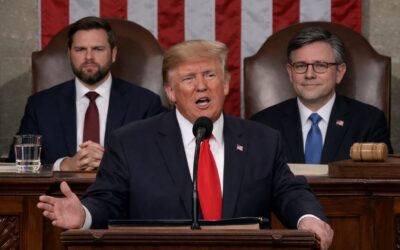
The idea of adding a 51st state to the United States has been discussed periodically since 1959, when Hawaii and Alaska became the 49th and 50th states. Most often, this conversation has focused on U.S. territories like Puerto Rico or the District of Columbia. Canada was first mentioned in this context by President-elect Donald Trump during a meeting with Prime Minister Justin Trudeau in December 2024—a remark that Trudeau reportedly took as a joke. Mr. Trump confirmed in a February 9 Super Bowl interview that his intention to annex Canada was “a real thing”, at which point our governments started taking it seriously. Since then, Mr. Trump has repeatedly floated the concept in off‑hand remarks, social‑media posts, high‑profile interviews and diplomatic phone calls. For more details, see the March 2025 New York Times article.
The US president also told Mr. Trudeau that he does not believe the 1908 treaty which finalized the borders between the US and Canada to be valid.
Rationale
Mr. Trump has repeatedly claimed that the US subsidizes Canada to the tune of $200 or $250 billion, a situation which he believes cannot be allowed to continue and should be resolved by our becoming a US state. The reality is quite different. What he is really referring to is a trade deficit. Canada is the USA’s largest trading partner and the largest buyer of its goods and services. In 2024, that included a $100 billion merchandise trade surplus which was partially offset by a $15 deficit on services, resulting in an $85 billion balance in our favour. That amounts to only 4% of the overall US trade deficit, the second smallest of all of its major trading partners. Their single largest purchase from Canada was $160 billion for petroleum, which they obviously only imported because they needed it. Mr. Trump’s logic is like claiming that one’s annual grocery bill is a subsidy to the grocers, which would be tantamount to believing that we actually deserve all that food for free.
Consent
One very important word which Mr. Trump has yet to use in any of his statements to date with respect to annexing Canada is consent. This is a very important word by Canadian values. Most Americans would consider it unthinkable that a foreign leader insist they should give up their nationality in the service of someone else’s agenda. Yet, he obviously believes that, not only is he entitled to make that huge ask of us, but we don’t and shouldn’t have the choice.
The Red Herring of Statehood
While most of us dislike the idea of becoming a US state, the unspoken assumption is that we would be a state like Florida, New York or Pennsylvania. Even Canadian conservatives would be flaming left-wingers by current Republican standards. If you think about the extreme gyrations which by which the state Republican parties go through in the many states which they control to gerrymander electoral boundaries so as to ensure victory, there is realistically no way that they would ever consent to adding some 30 million Canadian voters.
There is also no provision in Canada’s constitution for our joining another nation and therefore a very different constitutional order, as well as very little appetite among Canadians for becoming American.
All of which is to say that the only path available for Mr. Trump to succeed in his stated ambition of expanding his realm to include Canada is by military force, a takeover which we quite simply lack the capacity to resist. Our status would therefore become that of a US territory, with no referendum, no Charter of Rights, no voting rights and all significant decisions taken in Washington for his Administration’s purposes. Our futures and those of our children and grandchildren would be entirely in his hands and those of his successors, whomever they may be.
Probability
Until the event of the past year, any Canadian who warned of a possible takeover by our closest ally would have been deemed to be mentally deranged. Now, not only is that a real-world possibility, but its probability is impossible to estimate with any degree of confidence. Mr. Trump has already done many things that most rational observers would have previously deemed unthinkable. Our federal government is undoubtedly undertaking such assessments to inform contingency plans, but the results would in all likelihood be highly classified and therefore unavailable for public discussion. Wisdom suggests that we collectively put some thought into how we could and should react under various scenarios. As just one example, how should a correctional services officer respond when ordered by a new supervisor installed by an occupying power to imprison fellow Canadians who have declined to follow that power’s dictums? Would doing so be treason? People in other countries have faced such ethical and practical dilemmas, but thus far never Canadians.



0 Comments